
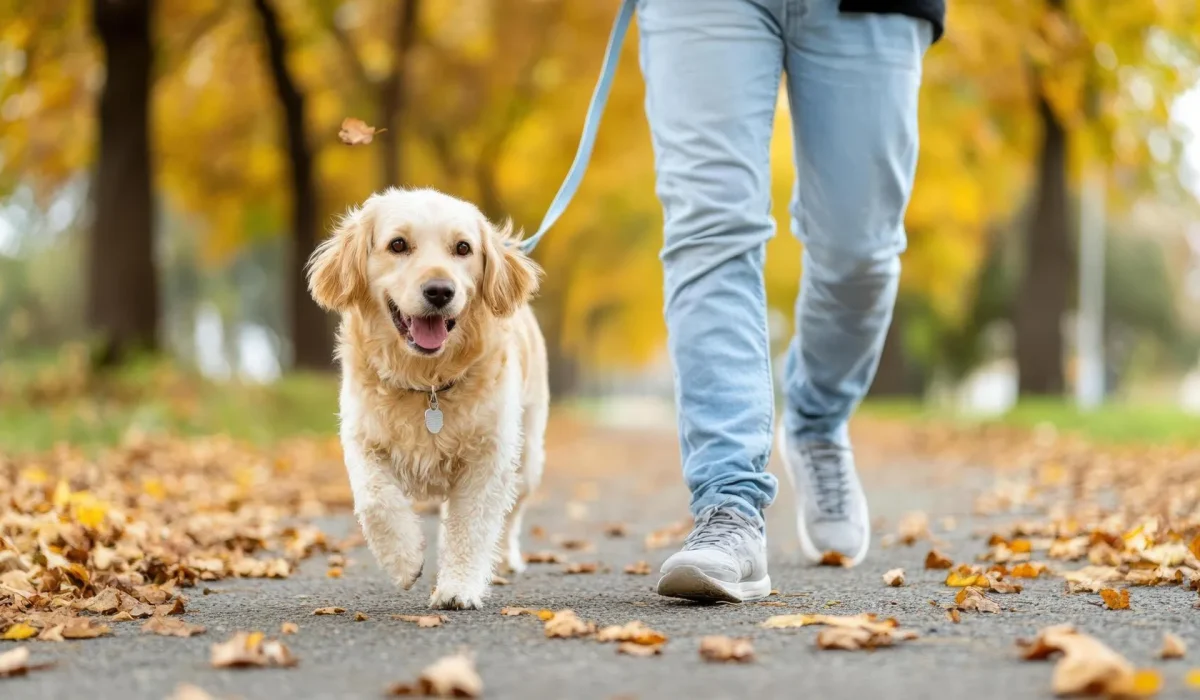
Spring is one of the best times for dog walking in Walnut Creek, with cooler mornings, greener hills and longer daylight inviting people outdoors. It is also the season when risk starts to shift. New growth can hide sharp seed heads, wildlife is more active, and exposed ridgelines warm quickly by late morning. In Walnut Creek’s open space, dogs may be off lead in some trail areas only if they remain under positive voice and sight control, while other sections have tighter restrictions. That makes planning all the more important.
Why Spring Dog Hiking Safety Matters in Walnut Creek
Good spring outings depend less on distance and more on judgment. Spring dog hiking safety comes down to choosing the right terrain, walking at the right hour, and noticing the small signs that a dog is getting tired, overstimulated or uncomfortable.
In foothill conditions, a fit dog can still struggle if the route is steep, dry underfoot, or crowded with bikes and other dogs.
A reliable Walnut Creek dog walker will usually keep the pace steady, allow for water breaks, and avoid pushing a dog through heat or brush simply to cover more ground. That measured approach matters most in spring, when the trail can look mild while still carrying seasonal hazards.
Walnut Creek Open Space trails
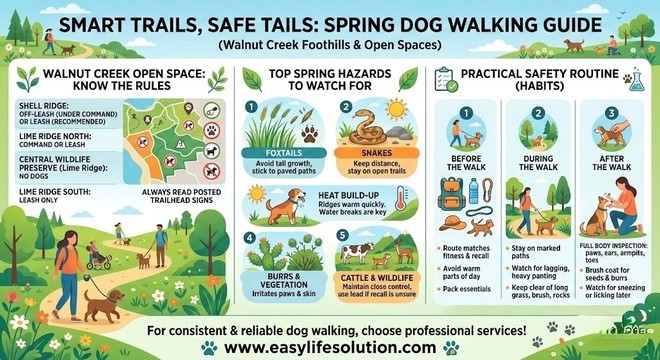
Walnut Creek’s open space network is varied enough that one set of rules does not fit every walk. The city states that trailheads are posted with dog rules, and those signs deserve attention before the lead comes off.
In Shell Ridge, dogs may be off lead only under positive sight and voice command, though rangers recommend keeping them leashed because of wildlife and cattle.
Lime Ridge is more complex again: north of Ygnacio, dogs may be under positive command or leashed. In the central wildlife preserve south of Ygnacio, dogs are not allowed. Farther south, dogs are permitted on lead only.
For that reason, route choice should be practical:
- pick wider, clearer paths for excitable dogs
- favor early starts on exposed ridges
- avoid areas with grazing cattle if recall is unreliable
- keep a lead handy even where off-lead access is permitted
For owners who want consistency, professional dog walking services can be useful because a regular walker often learns which routes suit a dog’s stamina, confidence and manners around distractions.
Common Spring Hazards on Foothill Walks
The main risks are familiar, though they often appear together.
- Foxtails are a leading concern. UC Davis advises avoiding heavy growth, sticking to paved paths where possible, keeping dogs leashed in foxtail areas, trimming hair between toes and around ears, and checking the coat carefully after walks.
- Snakes are another seasonal issue. If you spot one, the safest response is distance. Keeping to open paths and using a lead lowers the chance of a close encounter.
- Heat builds quickly on bare hillsides. A dog that seems fine at the start may flag on the return leg, especially after climbing.
- Rough vegetation, burrs and uneven ground can irritate paws and skin.
- In Shell Ridge dog walking areas and similar open spaces, cattle and wildlife add one more reason to keep control close and calm.
These are the real spring trail hazards for pets, and they reward simple habits more than fancy gear.
A Practical Safety Routine Before, During and After the Walk
A sound routine helps more than last-minute improvisation. For dog safety, the basics are straightforward and worth repeating.
Before you set out:
- choose a route that matches your dog’s fitness and recall
- carry water, a lead and waste bags
- avoid the warmest part of the day
During the walk:
- stay on marked paths
- keep clear of long grass, rock piles and dense brush
- slow down if your dog starts lagging, panting heavily or scanning frantically
After the walk:
- inspect paws, ears, armpits and between the toes
- brush the coat and check for seed heads or burrs
- watch for sneezing, head shaking or sudden licking later in the day, as these can point to a lodged foxtail.
Frequently Asked Questions:
- Are dogs allowed off-leash in Walnut Creek?
In some open space areas, yes, but not everywhere. The City of Walnut Creek says dogs may be off lead in designated trail areas such as Shell Ridge and Lime Ridge north of Ygnacio Valley Road only when they are under positive voice and sight command, and trailhead signs should guide the decision. - How to protect dogs from foxtails on trails?
The best approach is to avoid thick foxtail growth, keep to clearer paths, use a lead in risky patches, and check the coat closely after the walk. UC Davis also advises trimming hair between the toes, around the ears and along the belly, where seed heads can catch easily. - What are the Best dog-friendly hikes in Walnut Creek
The better choice is the one that fits your dog. Many owners favor open sections in Shell Ridge or the permitted parts of Lime Ridge, but the safest route depends on heat, wildlife, crowd levels and whether your dog can respond promptly when called. - What to do if a dog sees a rattlesnake?
Create distance at once and keep your dog calm. If a bite is suspected, seek veterinary help immediately, call ahead if possible, and do not try to catch or handle the snake.